Concord Garage Door ServicesBulletin 1 of 3Vaughan, Ontario
Garage Door Safety Inspection: step by step
The visit runs in a settled order.
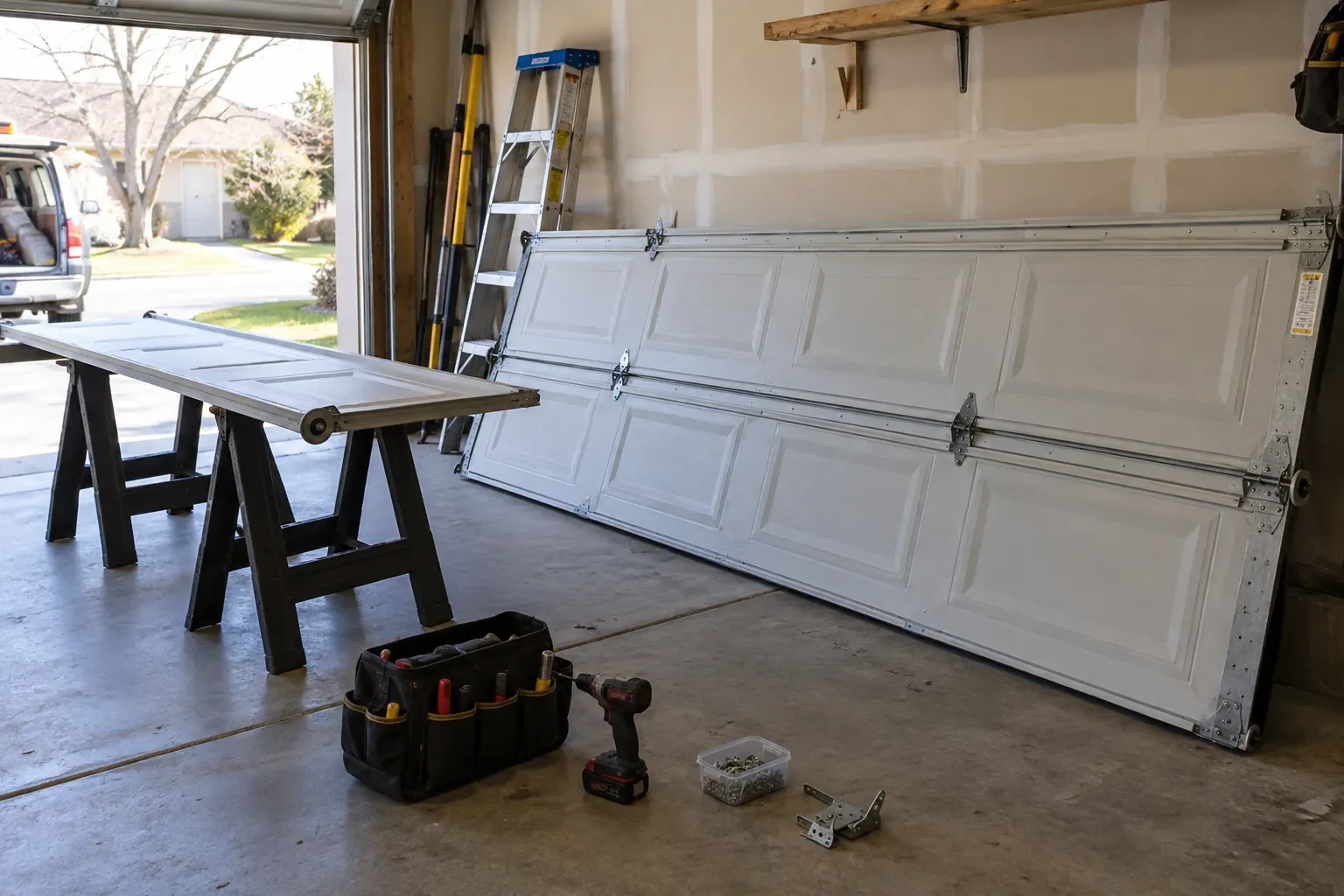
The visit runs in a settled order. First the door and opener are identified and the right test procedure looked up. Then a visual walk of the closed door, from the top section down to the bottom seal, and along both tracks. Next a full cycle under power while the technician listens and watches. Then the opener is disconnected for the manual balance check, reconnected for the reversal and photo-eye tests, and the controls, release cord and mounting brackets are checked. Finally the findings are explained at the door and written up, so you know exactly where the door stands before anyone leaves.
Springs, cables and drums, looked at and left alone
The counterbalance gets a careful look and nothing more during the inspection. On a torsion door the technician checks the spring coil for a gap, rust or a stretched section, confirms the cone set screws and centre bearing look sound, and follows each cable from the drum to the bottom bracket looking for broken wires, a rust bloom near the loop or a slack side. The drum wrap is checked for a single neat layer. On an extension door the springs, pulleys and containment cables are examined the same way. Any adjustment to these parts is a separate, planned job matched to that system, torsion tension controlled with winding bars rather than simply released; the inspection records their condition.
Fasteners, tracks and hinges with tools in hand
Once the door has been tested, the technician goes back along it with a socket set and a level. Every hinge bolt and track bracket is checked for tightness, and any that has backed out is snugged; the bottom roller brackets are left to the trained, system-specific handling their lift-cable tension calls for, not a routine snug. The vertical tracks are checked for plumb and the horizontals for level, with the door-to-track gap measured and any pinch or flare recorded. Hinges are numbered from the bottom up and a hinge in the wrong position, often left from an earlier repair, is noted. A stripped fastener or a bent bracket becomes a repair item rather than a tightening.
Repairs in a sensible order
If the report lists planned repairs, it also suggests an order, because some items lean on others. A cable showing rust at the loop comes before a new roller set, since cables are changed with the counterbalance unloaded and rollers are a simple job at any time. Springs near the end of their cycle life are planned as a pair, with the cables checked in the same visit. Photo-eye alignment and a stripped bracket fastener are done first because they are small and they matter. You can take the list in one go or over a few months; either way, nothing in it is a surprise when the technician returns.