Skip to content
ConcordGarage Door ServicesOpen 24/7 (289) 216-7853
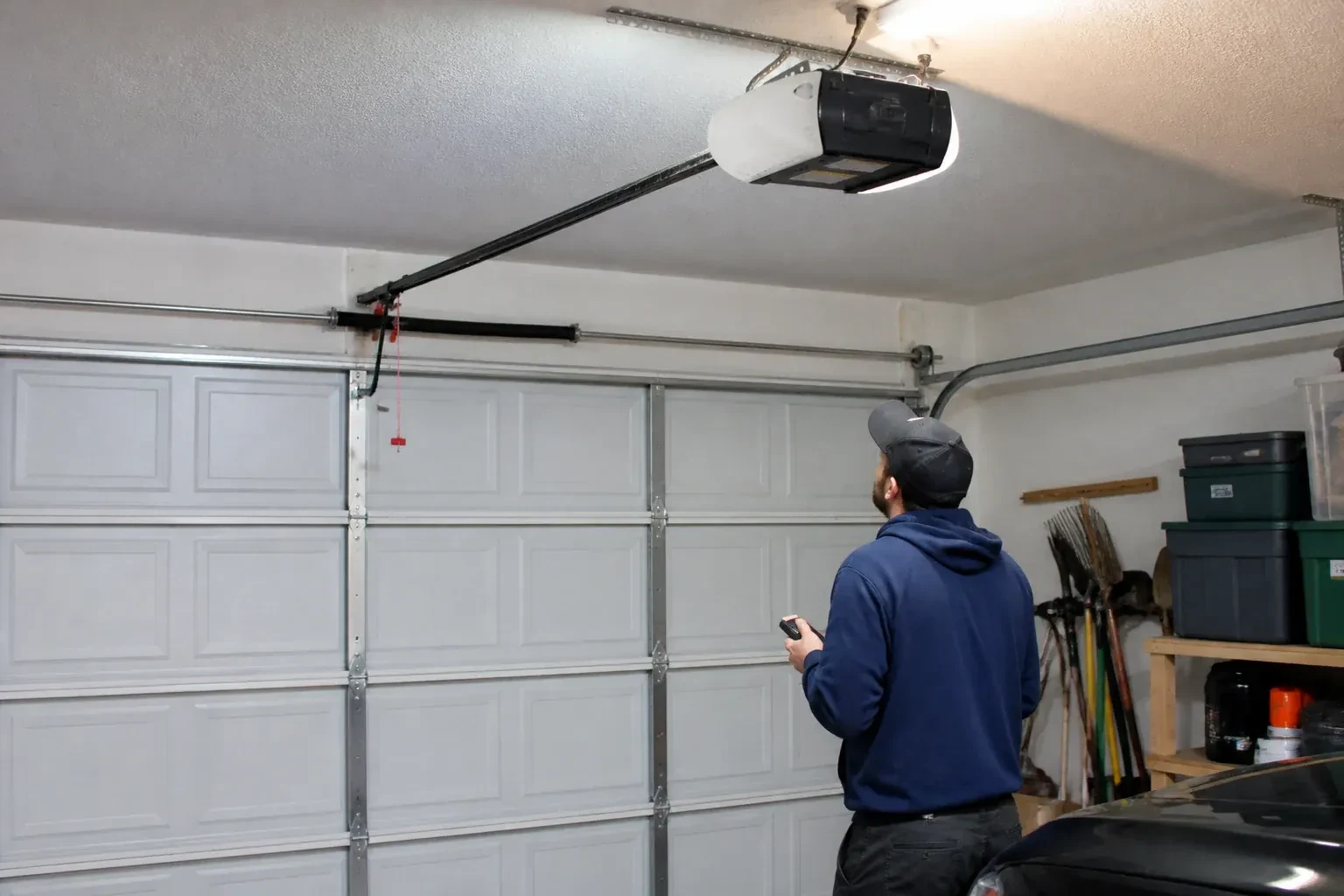
A person holding a remote looks toward an overhead garage-door opener and rail. — Garage Door Opener Diagnosis and Repair, Vaughan

Openers · Vaughan

Garage Door Opener Diagnosis and Repair

It is a January morning and the door lifts about a hand's width, groans, and settles back down. When you pull the release and try by hand the door feels far heavier than it used to, and the bottom seal is stuck hard to the slab.

In plain words

Most openers built in the last fifteen years report their own trouble. When something is wrong the head unit blinks its lights in a count, an up arrow and a down arrow flashing in a pattern, or a status light repeating a number. Each pattern has a meaning on the maker's chart for that model: a sensor circuit open, no motor movement detected, too much force needed to close. The technician reads the pattern, checks it against the model, and confirms it with a hands-on test rather than trusting the light alone. Older units without codes are diagnosed by ear, by meter and by hand.

Sound familiar?Vaughan

The call
Nothing. No light, no click, no hum from the unit on the ceiling. The remote is dead, the wall button is dead, the keypad is dead. It worked yesterday evening, before the storm knocked the power out for an hour and brought it back with a flicker.
NextHow the visit goes

Garage Door Opener Diagnosis and Repair · Vaughan

How the visit goes

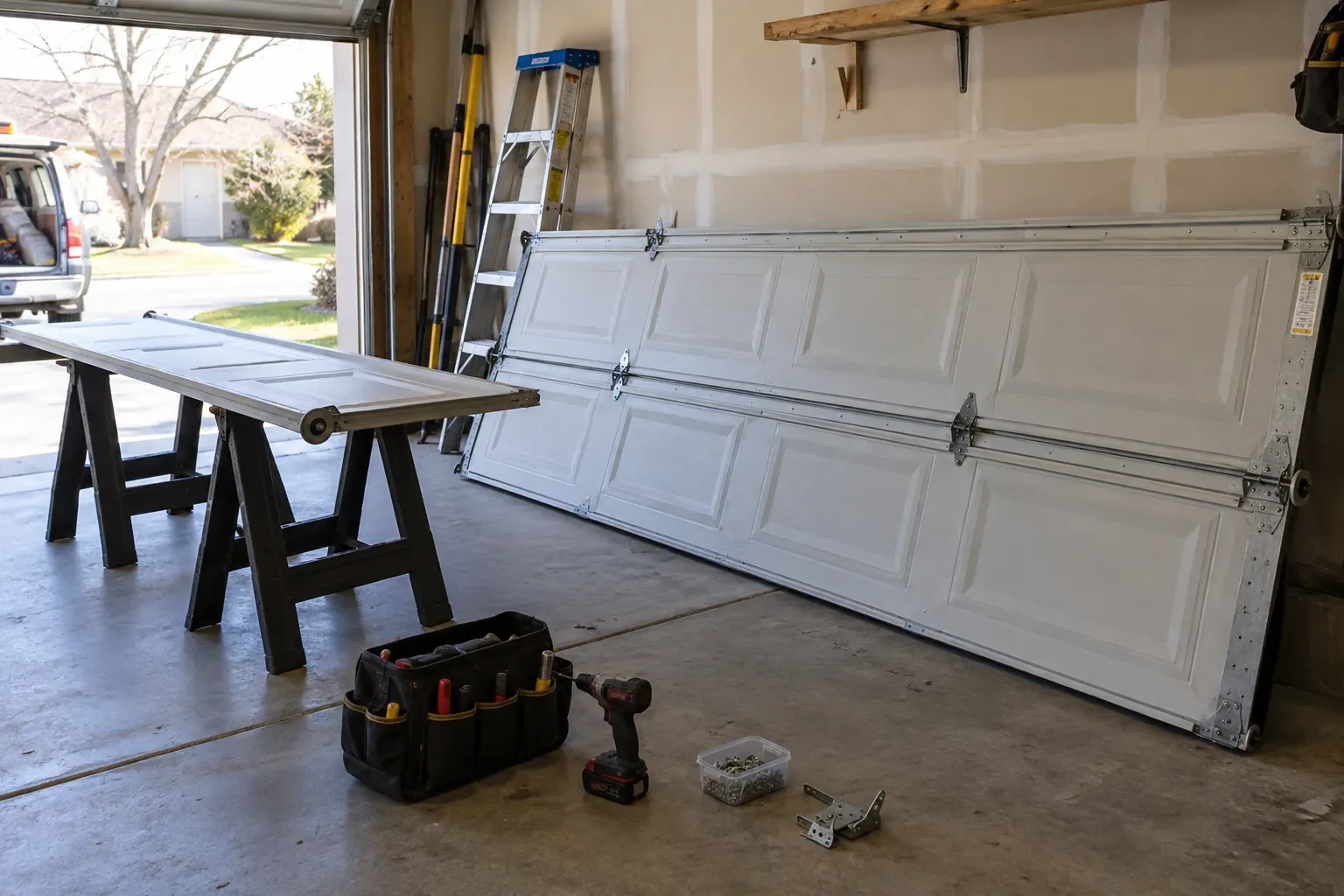
Paneled garage door leaning on its side against a wall, with one section on sawhorses and a tool bag on the floor. — Vaughan
  1. Scene 1

    Limits, force and the two safety tests

    Finally the settings are checked against what the door actually does. Travel limits decide where the door stops at the top and how firmly it meets the floor; a limit set slightly long makes the door hit the slab, sense an obstruction and pop back open. Force settings decide how much resistance the opener tolerates before reversing, and these drift, or get turned up to hide a stiff door. Both are read, the door is run through full cycles, and the contact reversal test with a 2x4 and the beam-interruption test are performed. Any setting that only passes because force is cranked high is treated as a symptom.

  2. Scene 2

    Setting travel and force, then proving them

    Once the mechanical cause is dealt with, the opener is set up as if newly installed. Travel is adjusted so the door seals gently on the floor without hammering the slab and stops at the top clear of the header. Force is set as low as will reliably move the door through a full cycle in the current season, never higher. Then the door is closed onto a 2x4 lying flat on the floor and must climb back to open the moment it touches; and while closing again, a broom handle is passed through the beam and the door must stop and rise. Failing either means the setup is redone, not accepted.

  3. Scene 3

    A record you can keep

    You receive a plain account of the visit: the model and serial of the opener, what the symptom turned out to be, which parts were replaced, what the travel and force settings are now, and anything noticed for the future, such as rollers approaching the end of their life or a spring nearing its cycle count. Keep this with the house papers. It makes a later service call shorter, it tells a buyer the door has been looked after, and it gives you the model number ready when a remote needs replacing or a code needs looking up.

In the van

  • Drive gear and sprocket kit
  • Photo-eye sensor pair
  • Remote batteries (coin and cylinder cells)
  • Trolley and carriage
  • Chain or belt

What shapes the quoteConcord Garage Door Services

Which component failed
A capacitor, a sensor pair or a re-engaged trolley sits at one end of the range; a logic board or a motor sits at the other. The diagnosis names the part before the quote is settled.
Battery backup pack
DC openers with backup power carry a battery that ages like any other. If it is at the end of its life, its replacement is listed separately from the diagnosis.
Connected features
A unit with a network module, door-position sensor or hub may need its pairing restored or a module replaced, which is quoted as its own step alongside the mechanical repair.

FeesSame any hour

Have it ready

Before you call · 0 / 3

(289) 216-7853

The questions that come up

How old is too old to repair?

Age alone is not the test; parts and safety are. The technician checks the exact model and part numbers, because even a unit from the last two decades can have a board, sensor or trolley that is no longer made. Where the parts are available, a repair is usually straightforward. Where a key part is discontinued with nothing to replace it, or the unit predates photo eyes, replacement is the sounder choice even for a small fault. The technician tells you which side of that line your unit sits on.

How long does a diagnosis visit take?

The checks themselves run in a set order and take a modest part of an hour on most doors. What extends a visit is the repair that follows: a gear kit or capacitor adds a little, a sensor re-wire or a trolley change adds more, and a door-side problem such as a balance fault may mean a second piece of work. You are told where things stand once the cause is found, before any further work begins.

Which parts most often need replacing on an opener?

The list is short and familiar: the drive gear and sprocket on chain-drive units, the start capacitor on AC motors, the photo-eye pair and its wire, the trolley and carriage, the wall control, the remotes and their batteries, the light socket, and on newer units the battery backup pack. Logic boards and motors are replaced less often and weighed against the unit's age. Most of the common items are carried to the visit.

Vaughaninformation

YorkOntario

Garage Door Opener Diagnosis and Repair · Concord, Steeles Corners, Thornhill

Town
Vaughan, York
In business
32 years
Hours
Open 24/7
Nights, weekends and holidays, same fees
Visits
On-site assessment preferred. Request a visit or call.

2021 census: what it means at the door

Every square is one home in a hundred.

  • 8 in 100 homes · newer homes
  • About 8% of homes in Vaughan were built in 1980 or earlier, according to the 2021 Census.In newer areas the garage doors along a street often share a style and colour, and homeowners generally want a replacement that blends in. We match panel profiles and finishes closely, or help you choose a deliberate change that still sits comfortably with the neighbours.
  • Single-detached houses make up about 63% of homes in Vaughan (2021 Census).Where most homes are single-detached, nearly every property has its own garage door and its own opener, and the homeowner makes every decision about it. That makes for straightforward visits: one door, one owner, and a repair or replacement chosen at the house without anyone else to consult.

Source: Statistics Canada, Census Profile

Open Vaughan in Google Maps

On-site assessment

Request a visit.

It is a January morning and the door lifts about a hand's width, groans, and settles back down.

(289) 216-7853, open 24/7.